Depopulation and abandonment of Small Starohorodivka
Grey BeesThe depopulation and abandonment of Small Starohorodivka are not a single evacuation but a drawn-out remaking of village life under war. As residents leave and familiar services disappear, Sergeyich and Pashka become the last two inhabitants, maintaining a tenuous human presence amid shuttered homes, uncertain communications, and a landscape shaped by nearby forces. The village’s emptiness is measured not only in absent people but in the weakened routines and connections that once made it a community.
Departure and the Emptying Village
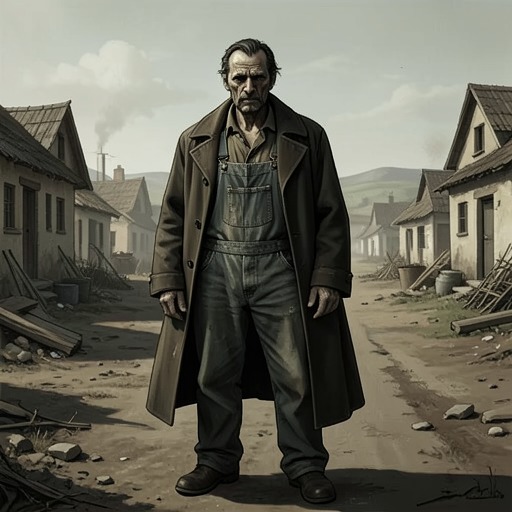
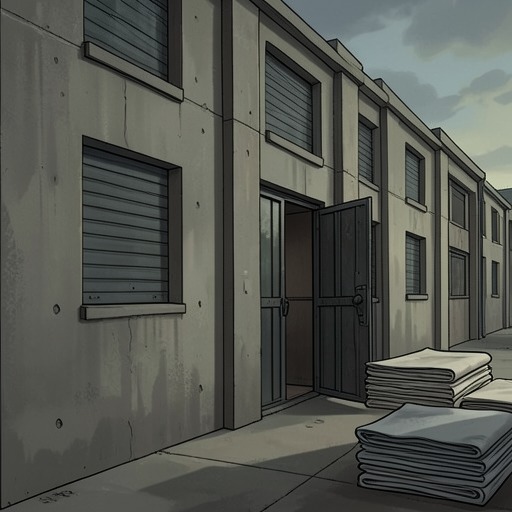
Most inhabitants leave when fighting begins, choosing safety over houses, orchards, farms, and other property. The departures unfold in stages: fathers first send wives and children to relatives in Russia or elsewhere in Ukraine, then leave themselves, while elderly residents are among the last to be taken away. Sergeyich remembers the first shell striking the church and the departures that followed. The contrast between the village’s former population and its sudden quiet makes abandonment an ongoing process rather than a clean break: doors are boarded, some windows covered with plywood, and the village’s streets lose their ordinary inhabitants.
The broader grey zone gives this local retreat its harsh setting. Many settlements there have lost residents, shops, post offices, and police stations; those who stay live with the possibility of shells overhead and shrapnel in their yards. In Small Starhorodivka, a two-week lull in the shooting offers no assurance of safety. It only makes the emptiness more noticeable, leaving Sergeyich to wonder whether he and Pashka are the village’s final residents.
The Two Who Stay
Sergeyich and Pashka had been enemies since their school days and had never even exchanged greetings. War brings them into an unlikely shared condition: they are the last two people clinging to their homes. Their gardens face different directions and the front lines are near enough to shape what each man hears and sees. Pashka’s response to the danger is practical attachment to his property; he insists that his cellar is deep enough to shelter in if necessary. Sergeyich, meanwhile, is left with a diminished response to danger and a stubborn sense of responsibility focused on his bees.
Their continued presence carries a hope beyond their own survival. Sergeyich reasons that if everyone leaves, no one will return; if two residents remain, those who fled may come back when the fighting ends, the mines are gone, and shells no longer fall. Staying therefore becomes a small, uncertain claim on the village’s future. It cannot restore the community or guarantee that anyone will return, but it preserves the idea that the place is still inhabited and might again become a home.
What Disappears with the Population
The absence is visible in the animals and household life as well as in the boarded buildings. Sergeyich is relieved to hear dogs barking on his way to visit an elderly resident: besides him and Pashka, he believes there is no one left in the village. Dogs and cats have disappeared, while mice and rats seem more likely to survive without people. Goats, pigs, and chickens, he thinks, cannot make it without human care. The comparison makes the village’s abandonment concrete: human withdrawal has also broken the ordinary arrangements on which domestic animals depend.
Infrastructure and routine become reminders of how little continuity remains. As spring approaches, Sergeyich’s house holds warmth longer, though coal still has to be carried in and the damp cold lingers outside. When Ukrainian postal workers finally arrive during the brief Postal Ceasefire, the word UKRPOSHTA on their van brings him joyful surprise. The return of a postal service is a rare sign that contact with the outside world can be restored, even temporarily, in a place where everyday institutions have disappeared.
Isolation, Time, and the Possibility of Return
The village’s emptiness shapes Sergeyich’s experience of time and connection. As he drives away, he worries that the alarm clock left at home will wind down and fall silent. He imagines that Pashka will not remember to wind it, and wonders whether time itself loses its purpose when nobody is there to keep track of it. The thought turns abandonment into more than physical absence: a home without its occupant seems to lose the daily measure that makes it feel lived in.
Communication with family exposes another cost of displacement. Sergeyich finds their number on his mobile and calls almost accidentally; when a familiar voice answers, he cannot speak, and hangs up in tears. The village has not merely lost its population collectively: departures have fractured individual ties as well. Against this isolation, the postal van, a neighbor’s continued presence, and the hope of eventual return become modest but consequential signs of connection. Small Starhorodivka remains nearly empty, yet the two men’s persistence keeps abandonment from becoming, in their minds, a final verdict.